CLINICAL NUTRITION
$45.00
CLINICAL NUTRITION
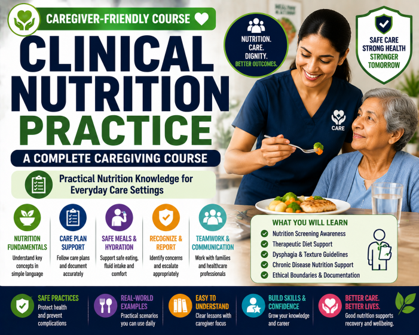
Learn how clinical nutrition principles appear in daily caregiving practice. This course introduces nutrition screening awareness, care plans, intake monitoring, therapeutic diet support, dysphagia precautions, chronic disease nutrition support, documentation, teamwork, and ethical boundaries.
Clinical nutrition practice connects food, fluids, health conditions, care plans, and outcomes. In professional settings, nutrition decisions may involve registered dietitian nutritionists, nurses, physicians, speech-language professionals, pharmacists, caregivers, families, and the person receiving care. Caregivers often support the practical parts of nutrition care: meal setup, safe positioning, intake observation, hydration reminders, reporting appetite changes, following texture instructions, documenting refusal, and encouraging dignity during meals. This course introduces clinical nutrition practice for caregiving learners. It does not qualify learners to assess, diagnose, prescribe diets, or provide medical nutrition therapy. Instead, it helps caregivers understand clinical nutrition language, follow plans accurately, recognize concerns, communicate with the team, and protect safety and dignity. Key Points • The course supports observation, practical assistance, and communication within role. • The course does not replace dietitians, nurses, physicians, or licensed clinical professionals. • Instructors should adapt examples, forms, and emergency procedures to their country and organization.
What You Will Learn In This Course
Course Modules
9 modulesModule 3
MODULE 3: The Nutrition Care Process
Who Is This Course For?
-
This course is appropriate for new and experienced caregivers, childcare workers, home care aides, nursing assistants, family caregivers, community support workers, and students preparing for health-related roles. Learners should move through the modules in order because later lessons build on earlier concepts.
-
Instructors may add local food examples, policy forms, cultural meal examples, referral pathways, emergency procedures, and workplace documentation templates. Because nutrition laws and clinical guidance vary by country and role, learners must follow local policy and qualified professional guidance.
-
Key Points
-
Use reflection questions for assignments, discussion boards, or journals.
-
Use mini activities for short practical tasks after each lecture.
-
Adapt resources, warning signs, and reporting pathways to the local setting